Articles
Inside Physical HDD Recovery: RecuperoDatos.com Highlights the Role of APEXTOOLLAB Precision Tools
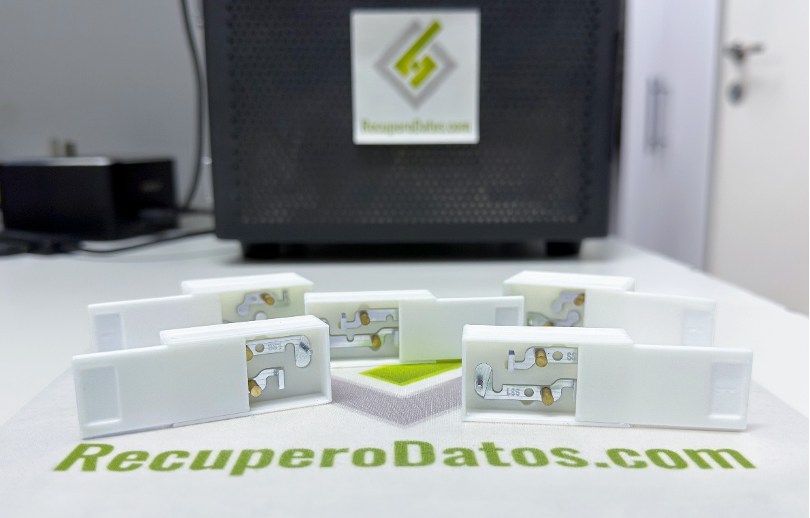
When a hard disk drive suffers mechanical damage, data recovery may require one of the most delicate procedures performed inside a professional data recovery laboratory: direct intervention on the drive’s internal components.
Damaged read/write heads, stuck heads, scratched platter surfaces, spindle-related problems, and internal contamination can make information inaccessible even when some of the data is still physically present on the platters.
In such cases, successful recovery depends on an entire chain of factors: accurate diagnosis, the condition of the magnetic surfaces, compatible donor components, a controlled working environment, specialized imaging equipment, the engineer’s experience, and the precision of the tools used during the intervention.
“Physical data recovery is not simply a matter of opening a hard drive and replacing a component. Every movement must be controlled, because unnecessary contact with the platters can permanently damage areas that may still contain recoverable information,” said Hugo Adrián Francisconi, CEO and Data Recovery Engineer at RecuperoDatos.com.
Why Head Stack Replacement Requires Extreme Precision
A hard drive’s read/write heads operate at an extremely small distance from the platter surfaces. When the head stack assembly is damaged, a compatible donor drive may be required to temporarily restore access to the information.
Selecting such a donor is far more complex than simply matching the manufacturer and advertised capacity. Depending on the case, data recovery engineers may need to compare:
• drive family and model;
• firmware and microcode characteristics;
• number of platters and heads;
• preamplifier compatibility;
• manufacturing date and location;
• mechanical architecture;
• head map and internal component configuration.
Even after a compatible donor has been identified, the head replacement procedure must be carried out with extreme care. The objective is to remove and install the head stack assembly while minimizing uncontrolled movement, preventing the heads from touching one another, and avoiding unnecessary interaction with the magnetic surfaces.
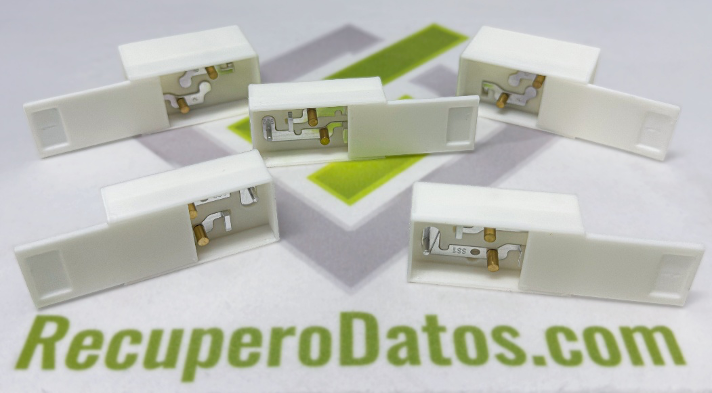
Specialized Tools Reduce Avoidable Risk
RecuperoDatos.com uses professional APEXTOOLLAB equipment as part of its physical recovery process for mechanically damaged hard drives.
APEXTOOLLAB develops high-precision tools for data recovery professionals, including head replacement tools, stuck-head removal tools, platter-handling tools, workstations, and other equipment designed for specific HDD families and configurations.
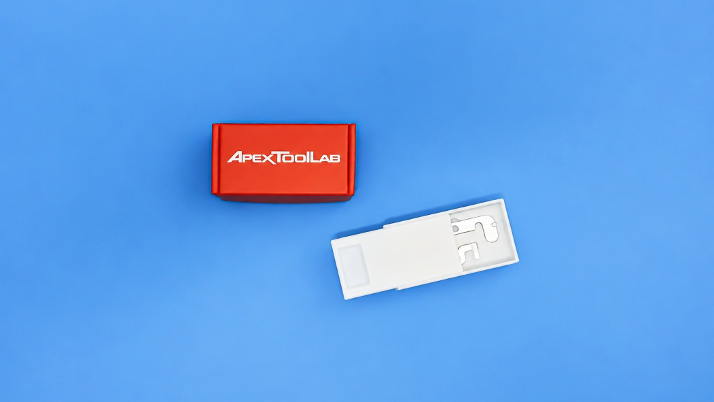
Unlike improvised methods or universal tools, model-specific equipment helps preserve the geometry and position of the head stack assembly during removal and installation. This gives the engineer greater control and helps reduce avoidable mechanical risks during an already delicate procedure.
“The purpose of a professional tool is not to make recovery automatic. It gives the engineer greater control, improves procedural repeatability, and reduces avoidable risks during complex mechanical intervention,” Francisconi explained.
The Tool Is Only One Part of the Process
Professional tools are essential, but they do not guarantee a successful recovery on their own. The final outcome depends on several factors, including:
• the extent of the original damage;
• whether the drive was powered on repeatedly after failure;
• previous recovery or repair attempts;
• the condition of the platter surfaces;
• the accuracy of donor selection;
• the technician’s experience;
• firmware diagnosis;
• the quality of the imaging strategy used after the intervention.
Once the mechanical procedure has been completed, the drive is not returned to normal service. Instead, it is connected to specialized data recovery equipment so that engineers can attempt to stabilize it long enough to create the most complete possible image of the accessible information.
In many cases, critical folders and files can be prioritized before unstable or severely damaged areas are read.
Why a Hard Drive Must Not Be Opened Outside a Controlled Environment
Opening a hard drive in a regular office, repair shop, or home environment exposes its internal surfaces to airborne particles. When the platters begin spinning again, contamination can interfere with head operation and cause additional damage.
Removing the cover also does not provide access to the files. It does not resolve firmware failures, electronic faults, or logical problems, and it can significantly complicate a case that may originally have been recoverable.
For this reason, physical intervention should be based on prior diagnosis and performed only in a controlled environment by trained personnel.
What Users Should Do After a Mechanical Failure
A hard drive that clicks, repeatedly starts and stops, disappears from the operating system, or produces unusual mechanical sounds should be powered off immediately.
Users should avoid:
• repeatedly powering on the drive;
• opening the enclosure;
• replacing the printed circuit board without proper diagnosis;
• freezing, hitting, or shaking the drive;
• running data recovery software;
• attempting to repair the file system;
• continuing to use the drive after unusual sounds appear.
These actions can turn a potentially recoverable case into a significantly more difficult one.
A Long-Term Commitment to Professional Physical Recovery
RecuperoDatos.com has worked with specialized mechanical tools for many years as part of its commitment to controlled and professional data recovery procedures.
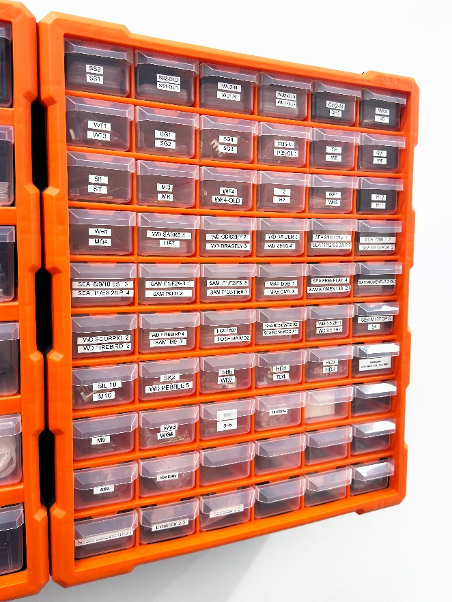
The laboratory continues to adapt its equipment and methodologies as hard drives evolve toward higher recording densities, larger numbers of heads, helium-filled designs, and increasingly complex internal architectures.
APEXTOOLLAB manufactures professional tools for a wide range of HDD families, including Western Digital, Seagate, Toshiba, HGST, Samsung, and other models. Its solutions cover head replacement, stuck-head removal, platter handling, and clean-area workflow organization.
“As data storage density increases, the margin for error becomes smaller. Working with precision tools, controlled procedures, and accurate diagnostics is essential to protecting the client’s information,” Francisconi concluded.
About RecuperoDatos.com
RecuperoDatos.com is a professional data recovery laboratory located in Buenos Aires, Argentina. The company specializes in recovering information from mechanically and electronically damaged hard drives, SSDs, flash memory devices, mobile devices, RAID systems, servers, and damaged databases.
The laboratory combines electronic engineering, controlled-environment procedures, specialized imaging systems, an inventory of donor components, and professional data recovery tools.
About APEXTOOLLAB
APEXTOOLLAB develops professional high-precision tools for data recovery specialists. Its product range includes head replacement tools, stuck-head removal tools, platter-handling tools, workstations, inventory organization systems, and model-specific solutions designed for physical HDD recovery procedures.
Press Contact
Hugo Adrián Francisconi
RecuperoDatos.com
Buenos Aires, Argentina
Email: soporte@recuperodatos.com
Website: https://recuperodatos.com